
A large proportion of the vegetables and flowers you buy in the shop have been grown using peat. The trees and flowers in the park have been grown using peat. The forest that provides timber and energy began its life as small seedlings grown in peat. The pigs that provide the pork chop on your plate have rooted around in iron-enriched peat. Peat plays a much bigger role in your life than you realise!
Information from
YES side
Vote YES to peat extraction
Peat plays a much bigger role in your life than you realise! Your vote counts – vote ‘yes’ in the referendum!!
The ‘Yes’ campaign argues in favour of continuing peat extraction in Sweden. All texts appearing on the ‘Yes’ page are taken from the website of the industry organisation Svensk Torv and Neova AB’s website.
Svensk Torv has been contacted and offered the opportunity to manage and run the ‘Yes’ campaign for peat extraction.
Why peat?

Sweden is rich in peat. Annual peat growth is conservatively estimated at between 20 and 40 million cubic metres. The peat industry harvests a domestic raw material used for horticulture, animal bedding, bioenergy and other purposes. Peat extraction in Sweden is subject to licensing and is carried out under the supervision of the authorities. Approximately 2.6 million cubic metres of peat were harvested in 2020.
Peat extraction takes place on 0.5% of Sweden’s drained peatlands. Peat extraction occurs only on previously drained peatlands; no undisturbed peatlands are utilised. The industry takes responsibility for the land we use; restoration is mandatory and carried out at no cost to taxpayers.
Restoration allows peat extraction sites to heal naturally and become valuable natural environments that quickly become new carbon sinks rather than leaking greenhouse gases. The industry has more than 1,500 hectares of good examples of restoration where drained peatlands, after the peat has been removed, have become woodland or new wetlands with water bodies.
Soil producers use compost and materials other than peat, but the alternatives are not available in sufficient quantity and/or quality. Compost is often cited as a good substitute for peat. In large-scale soil production, compost can only be used if mixed with other materials, and peat remains unbeatable as a blending material even for this purpose.
The peat industry has always worked closely with researchers. Through our own research foundation, TorvForsk, we support research into peat and the importance of peatlands, not least their environmental impact.
The industry association Svensk Torv works to ensure that energy peat continues to be regarded as an emergency fuel. In times of crisis, peat has always been used to make up for shortages of other materials, as it can be stored for several years. The most recent occasions when peat came to the rescue were the winter of 2017, when there was a shortage of wood fuel on the market, and the drought year of 2018, when the agricultural sector lacked bedding for livestock.
In Sweden, we have plenty of peat, and with sustainable peat extraction, there will always be peat available for secure food production, plant production for forestry, and for green urban and domestic environments. Furthermore, peat used as bedding provides a good stable environment with healthier animals and high-quality manure.
The absolute simplest and cheapest way to capture carbon dioxide from the air is to grow plants. Peat’s unique properties as a growing medium enable plant cultivation for food production, forest planting, greener urban environments and greener home environments. The benefits must be weighed against the impact caused by peat production.
Argument
Source:
Svensk Torv
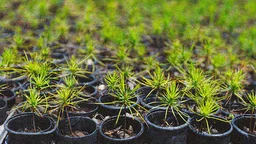
Between 400 and 500 million forest seedlings are planted in peat-based soil in Sweden every year.
Source:
Svensk Torv
Between 400 and 500 million forest seedlings are planted in peat-based soil in Sweden every year.
Reference:
Forest seedlings grow in peat
Access to peat-based soil is essential for growth in the Swedish forestry sector. Ensuring that every forest seedling thrives and does not wither is crucial for Swedish forestry and the forest industry. For forestry companies to make a profit, they must have high-quality peat, and peat is the only growing medium that possesses the right properties.
Swedish low-humification peat provides a good balance of air and water to the roots and automatically supplies the seedling with the correct pH value. A seedling’s roots have quite a few requirements, including being well-anchored, receiving oxygen and being able to release carbon dioxide, water, nutrients, the correct pH level, and soil that is free from diseases and harmful substances. Peat can provide all of this to the seedlings, which is why they grow best and become viable in peat-based soil.
Source:
Svensk Torv
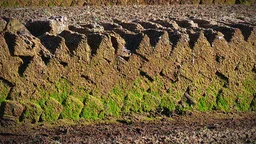
Peat growth amounts to approximately 40 million cubic metres, and the harvest is approximately 2 million cubic metres.
Source:
Svensk Torv
Peat growth amounts to approximately 40 million cubic metres, and the harvest is approximately 2 million cubic metres.
Reference:
Facts
The soil you buy for your garden is peat-based. 380 million forest seedlings are grown in peat every year. Almost all the cultivated berries and vegetables you eat are grown in peat.
It is important to distinguish between peat from undisturbed land and peat from drained, human-influenced land. In Sweden, peat is harvested only from drained land, which means that the argument, which often concerns undisturbed peatland, contributes to a misperception of peat extraction.
Peat extraction has a long historical tradition in Sweden. In the early 1900s, there were state-run peat schools that taught how to utilise peat for energy and cultivation. The state provided grants right up until the 1990s to encourage landowners to drain (dig ditches) their peatlands. The aim was to expand the country’s arable and forest land. This has resulted in over a quarter of Sweden’s peatlands being ditched. It is on these lands that we in Sweden can harvest peat and, through post-harvest treatment of the land, create a higher ecological value than the land had previously. Furthermore, greenhouse gas emissions are sequestered, turning the land into a carbon sink.
Peatland areas
Of the approximately 6.3 million hectares of peatland in Sweden, peat extraction accounts for 0.2 per cent.
Benefits of Swedish peat
Swedish peat reduces the need for imports and benefits the forest. These are just some of the benefits of using Swedish peat, which is also strictly controlled and where Sweden’s peat producers restore every square metre of land used to its former state of biodiversity.
Source:
Svensk Torv
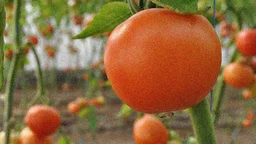
Many of the vegetables you buy start their lives in peat.
Source:
Svensk Torv
Many of the vegetables you buy start their lives in peat.
Reference:
Locally produced and sustainable food
All Swedish peat is produced under strictly controlled conditions. Peat is harvested only from peatlands that have already been drained and disturbed. Once harvesting is complete, the peat extraction site is always restored (converted) into carbon-sequestering land, such as a wetland or forest. This stops greenhouse gas emissions.
Emissions from peat extraction are also minimal, as it is only carried out on 0.5 per cent of all drained peatlands – the remaining 99.5 per cent is used for other activities. It is important to be aware of these proportions, as peat extraction accounts for only a minimal share.
Peat extraction is one of Sweden’s green industries
Peat extraction is one of Sweden’s green industries and, just like agriculture and forestry, the activity is regulated by the Environmental Code. It is this legislation that sets out the terms applicable to peat extraction, as well as to agriculture and forestry. Peat is not ‘mined’ but harvested. Topsoil is not “mined”, nor are arable crops, and peat production is just as weather-dependent as crop cultivation. The harvest varies from year to year depending on the weather – unlike minerals and gravel, which are extracted in fixed quantities every year.
To produce peat, a licence is required to harvest it. Peat producers only apply for licences to harvest peat on land that is suitable, i.e. land without natural value that has been heavily affected by previous drainage and therefore leaks greenhouse gases. After the peat harvest, these areas become new, valuable natural environments through mandatory post-harvest restoration, making peat extraction the only activity that, at no cost to taxpayers, creates new wetlands and biodiversity that help reduce emissions. All of this is beneficial for the environment and the climate.
During the period of the peat extraction licence, the County Administrative Board carries out regular inspections and the peat extraction operator must continuously submit various samples for analysis. Peat extraction is therefore both safe and controlled.
Peat plays a crucial role
Peat plays a crucial role in ensuring that we in Sweden have locally produced and sustainable food. Almost all the vegetables you buy began their life in a peat plug. Peat has unique properties that are necessary for the successful cultivation of plants. Peat-based soil/growing medium is easy to adapt to different crops, ensuring that cultivation is predictable and reliable. As plants do not need to be discarded because they fail to grow, cultivation in peat is sustainable.
Peat is available in large and consistent volumes, which is essential when growing food for an entire population. Peat is easy to store and transport and saves another vital resource – water. Another advantage is that peat is clean and free from pathogens, nutrients, heavy metals, weeds and other unwanted particles. Peat is a local raw material found throughout Sweden and causes no waste problems.
The fact that peat makes other materials circular is relatively unknown. But the reality is that, with peat, residual products from society can be transformed into growing medium. In this way, even lower-quality materials can become more circular, and this is a piece of the puzzle in the quest for a sustainable society.
Source:
Svensk Torv
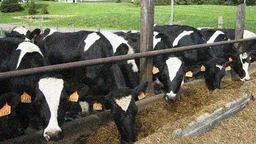
Peat litter is an increasingly important raw material, not least for animals.
Source:
Svensk Torv
Peat litter is an increasingly important raw material, not least for animals.
Reference:
Peat moss provides a better environment for animals
Bedding peat is an excellent material for animal husbandry as peat binds ammonia very effectively and is antiseptic. Peat binds nutrients, making it an excellent fertiliser, and also serves as a feed supplement for pigs. Bedding peat is a good alternative to straw in stables for pigs, cows, horses, sheep and chickens.
Good animal health
The beneficial properties of peat have led to an increasing number of Swedish livestock farmers using peat, either entirely or in part, in their herds. The reason is the material’s many beneficial properties, which contribute to reduced bacterial growth, fewer hock injuries, improved udder health and better hoof and claw health. Peat is also soft for the animals to lie on and reduces the risk of chafing.
The use of peat also improves the air quality for both animals and people working in these environments, as it produces less dust than straw and binds moisture very effectively. Furthermore, peat has an inhibitory effect on the development of fly larvae in this bedding material.
Peat is also used as a feed supplement for piglets, amongst others. Pigs that have been allowed to root and eat iron-enriched peat remain healthier, resulting in reduced antibiotic use. Peat products stabilise the pigs’ stomachs during the first few weeks, when the animals are most susceptible to gastrointestinal disorders.
– In our bedding peat production, we use peat that is as light in colour as possible for bedding peat; not only does it create less dust, but it also has significantly better absorbency, explains Mattias Andersson from BMR Produkter, which produces and processes peat bedding, peat blocks and peat mix.
He goes on to explain that they also mix wood shavings into the peat litter to make it lighter, and it also gives off a pleasant woody, forest scent in the barn.
– We use peat mix for our own animals, primarily for the light colour. Our mix contains 50% peat, so there is enough peat to retain all the beneficial properties such as absorbency and ammonia binding, which are better than in wood shavings, he adds.
Beneficial for the fields
The peat can also be reused as fertiliser and soil improver in fields. The ammonia from the animals’ urine, which is bound in the peat, provides nitrogen for the fields and promotes plant growth for new harvests. Peat does not contain long fibres and is not heavy to spread, making it easier to apply even with smaller tractors. Peat is also easy to plough into the ground, mixes well with the soil and increases the humus content.
In the equestrian sector, many riding schools use peat litter, primarily because peat makes manure management easier. Some riding schools have farmers who come and collect their manure for their fields, and in such cases, peat is excellent.
Another example is those running organic farms, where the peat binds nutrients and thus improves the nutritional value of the manure; they have to be careful with nitrogen as they are not allowed to use artificial fertilisers, explains Mattias.
An increasingly important raw material
Peat, wood shavings and straw are domestic materials, but the availability and quality of straw vary, and demand for peat always rises in poor harvest years. In Sweden, we also have higher peat growth than extraction, making it an infinite resource, especially when compared to other materials. Peat is becoming increasingly important as, for example, wood starts to become a scarce commodity. Wood is used in a wide range of products; amongst other things, plastic products are being replaced by wood. Wood is also increasingly being used for energy as oil is phased out.
Advantages of peat litter
- Peat’s low pH value prevents the formation of harmful ammonia and is also unfavourable for bacteria.
- Peat has the ability to bind ammonium, which means, among other things, that nitrogen is bound and does not escape into the air.
- Peat significantly reduces the volume of manure.
- Peat has antiseptic properties and prevents bacterial infections.
- Peat improves the air quality in the stable.
- Peat litter effectively binds positively charged plant nutrients because the peat particles are negatively charged on the surface. This prevents the nutrients from leaching out. The litter is spread on cultivated soil, where it acts both as fertiliser and as a soil improver, increasing the humus content.
- Peat is sought after by both farmers and gardeners compared to other bedding materials mixed into manure.
- Peat-mixed manure is easy to handle and does not require any further composting before being spread on the soil.
Source:
Svensk Torv
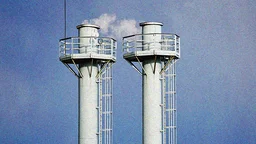
Peat provides heat and electricity in times of crisis.
Source:
Svensk Torv
Peat provides heat and electricity in times of crisis.
Reference:
Heating and electricity in times of crisis
For centuries, peat has helped to keep Swedish homes warm. Ever since the 16th century, peat has been a reliable source of heat, ensuring that the Swedish population has not had to freeze in their homes. This is particularly important when the electricity supply fails and the global situation makes the import of biomass uncertain.
Energy peat is a fossil-free domestic raw material; according to the IPCC, peat is classified in a category of its own due to its unique advantages in terms of co-firing, which means that a smaller quantity of raw material can provide more energy and can be stored for up to eight years. By using this locally produced raw material, always in combination with wood fuel, our dependence on other countries is reduced. Locally produced resources also significantly reduce the environmental impact of long-distance transport, a fact that many seem to overlook entirely. This makes peat an excellent emergency fuel in times of uncertainty, according to the Swedish Energy Agency’s new report.
Source:
Svensk Torv
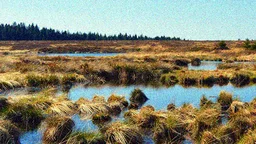
The peat industry restores more hectares of drained peatland than any other sector in Sweden.
Source:
Svensk Torv
The peat industry restores more hectares of drained peatland than any other sector in Sweden.
Reference:
A large part of the work involves restoration
No other green industry restores drained peatlands to such an extensive degree and at its own expense as the peat industry.
Once harvesting is complete, every centimetre of a peat extraction site becomes carbon-sequestering land in the form of, for example, new wetlands or areas rich in biodiversity. All of this contributes to reduced carbon dioxide emissions, which is the goal of the climate movement.

Opinion pieces

2025-06-21

2025-05-26

2025-05-08
2025-05-23

2025-04-30
